
Lincoln County Criminal Court Cases
Lincoln County uses more than one court for criminal matters. General Sessions Court decides misdemeanors and handles warrants, bonds, and preliminary felony stages. An indicted felony moves to Circuit Court/Criminal Court, which also hears de novo appeals from General Sessions. A de novo appeal is a new trial rather than a review limited to the first record. Both court levels appear in Lincoln County's official public portal. Fayetteville, Ardmore, and Petersburg municipal courts keep their own traffic and municipal-code matters, so a city citation may not appear in the county criminal docket.
The Circuit Court Clerk is the custodian of the Lincoln County case file. That file can include the charge, event history, motions, plea, judgment, sentence, and financial entries. The prosecutor or arresting agency may have related documents, but neither replaces the clerk's docket. A sheriff report tells how an event was investigated. A court case shows what prosecutors filed and how the judge resolved it. For an arrest-to-charge trail, the county's arrest lookup routes can supply the booking side while the clerk supplies the court outcome.
The Tennessee court description of General Sessions jurisdiction shows why the lower-court choice matters. Its official page is reflected in the image below.
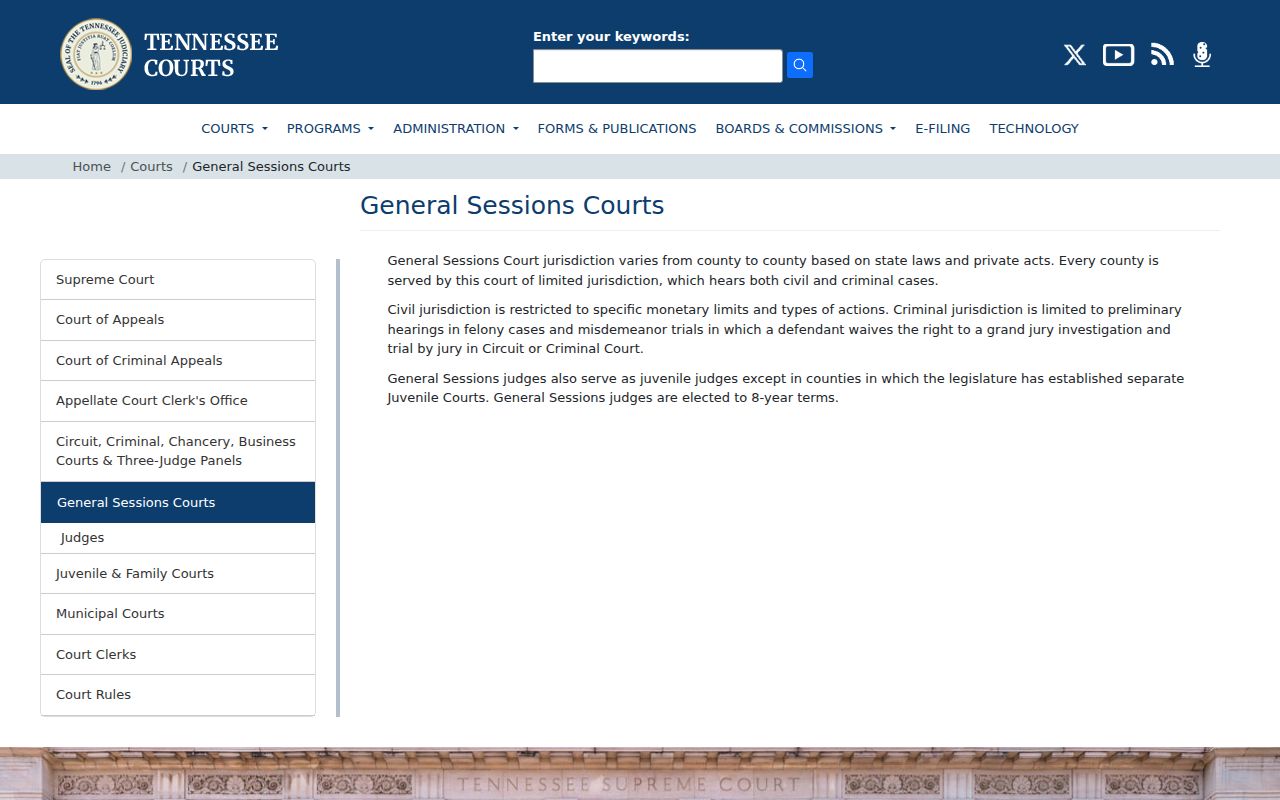
That court structure helps a searcher decide whether to begin with a misdemeanor docket or trace a felony from its preliminary stage.
Lincoln County Criminal Case Portal
The Lincoln Public Court Records System is the strongest first stop for a local case search. It covers Circuit Court and General Sessions and does not require a subscription login. Choose the court and Criminal case type before running a query. A broad party-name search may return records from both levels, while a court-specific choice makes it easier to follow the correct stage. The screen is a finding aid. It does not turn an online result into an official or certified court record.
The official Lincoln search interface is shown in the manifest image below through its public source page.
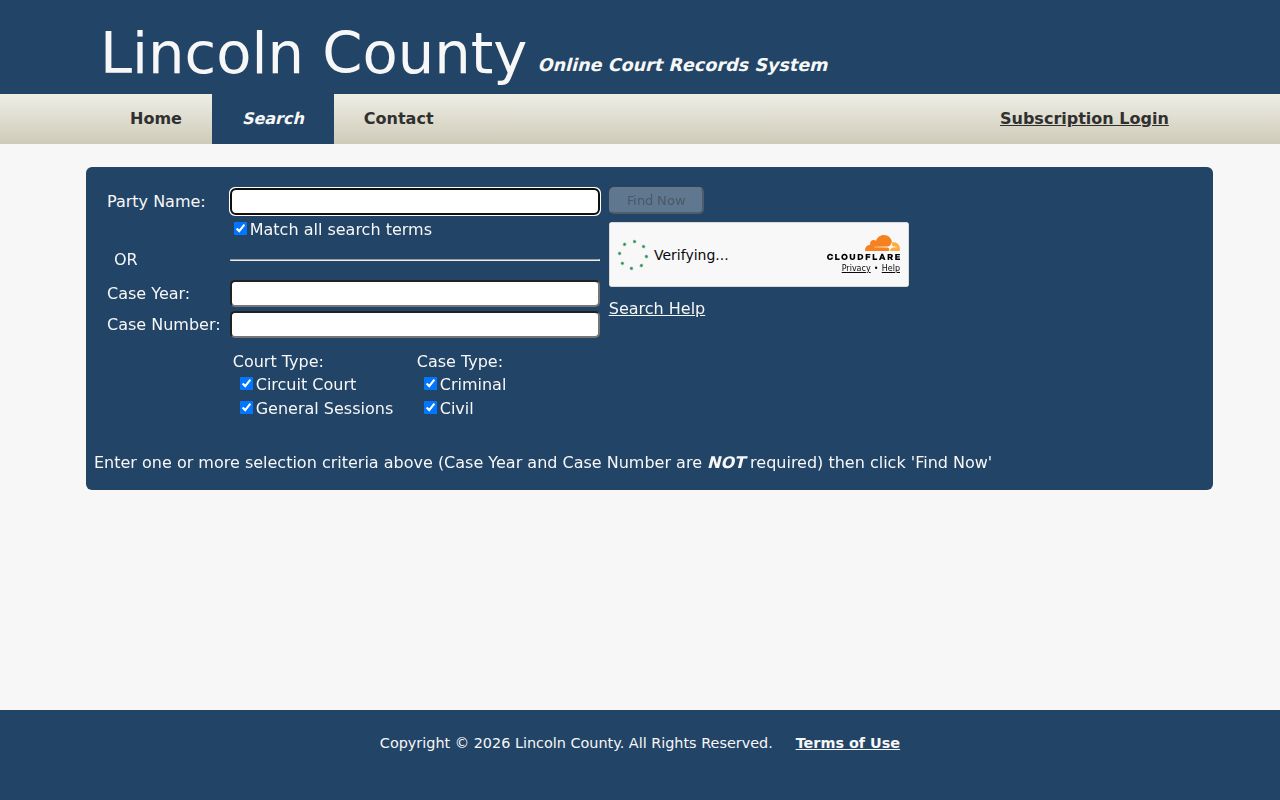
The captured screen confirms the local portal route and the controls a reader should use before calling the clerk.
Searching Lincoln County Case Records
Start with the best identifier available. A full name can work, but the filing year and final digits of a case number reduce false matches. The portal does not offer a date-of-birth, charge, or filing-date field in the reviewed interface, so those should not be treated as search controls. Follow this order:
- Open the Lincoln portal and select either Circuit Court or General Sessions, then select Criminal as the case type.
- Enter the party name or case reference. Keep “Match all search terms” selected when the full name is known.
- Add the case year or the final numeric part of the case number. Complete the required CAPTCHA.
- Select “Find Now,” sort result headers, and use the literal Filter on the visible result columns when needed.
- Contact the Circuit Court Clerk for older files, certified copies, or any docket entry that needs official confirmation.
The actual Lincoln portal inventory is narrow and useful. “One court-office combination” means the search needs both a court level and a civil/criminal type before it can run.
| Field Label | Type | Required | Notes |
|---|---|---|---|
| Party Name / Case Reference | Text | No | Full first and last name works best |
| Match all search terms | Checkbox | No | Recommended for a full-name query |
| Case Year | Numeric text | No | Use the filing year |
| Case Number | Numeric text | No | Enter only the final numeric segment |
| Court Type / Case Type | Selection | Yes | Choose Circuit or General Sessions, then Criminal |
| CAPTCHA | Checkbox | Yes | Must be completed before Find Now |
Lincoln County Case Number Shortcut
A full reference such as 99GS1-2023-CR-12345 becomes 12345 in the Case Number box. The court prefix, year, and “CR” segment provide context, but the reviewed portal asks for the last numeric segment. A searcher can place 2023 in Case Year and 12345 in Case Number, then pair those fields with General Sessions and Criminal. This local rule prevents a common empty-result problem caused by pasting the whole formatted number into one box.
The party-name engine is more flexible. Only the first ten party or reference words count. It ignores case and certain soft separators, supports quoted phrases, and permits one typo in a term of at least five characters or two typos in a term of at least nine. When Match All is active, the portal may remove terms from the end to fill results. The visible-results Filter is different: it performs a literal search, and the maximum return is 2,500 rows.
Inside a Lincoln County Case File
A case file follows the prosecution, not merely the arrest. Search results identify a candidate docket, while the official clerk record establishes the filed charge, the sequence of court events, the final judgment, and any sentence. No private sample detail was retained during research, so the inventory below describes document categories confirmed by the Tennessee system map rather than invented screen fields.
| Case Number and Court | Identifies the Lincoln court level, filing year, and local matter |
|---|---|
| Charging Document | Complaint, indictment, true bill, or other filed accusation as applicable |
| Docket Entries | Chronological record of filings, settings, hearings, and court action |
| Plea and Motions | The defendant's formal response and requests decided during the case |
| Disposition and Judgment | Dismissal, acquittal, conviction, or another recorded outcome |
| Sentence and Financial Entries | Confinement, supervision, fines, costs, or restitution when ordered |
Note: A portal result locates a case, but only the Lincoln County clerk can issue an official certified copy.
Lincoln County Clerk in Room 203
For certified, older, or unclear criminal files, contact the Lincoln County Circuit Court Clerk in Room 203, 112 Main Avenue South, Fayetteville, TN 37334. The phone is 931-433-2334, fax is 931-438-1577, and the research lists lsimmons@lincolntncourts.com. Call before traveling because Lincoln County does not publish a criminal archive cutoff, public-terminal guide, local copy price, or detailed counter rules. Ask whether the file is General Sessions or Circuit/Criminal and whether staff need a case number, full legal name, or approximate filing date.
The official clerk contact screen supports that route and appears in the next image.
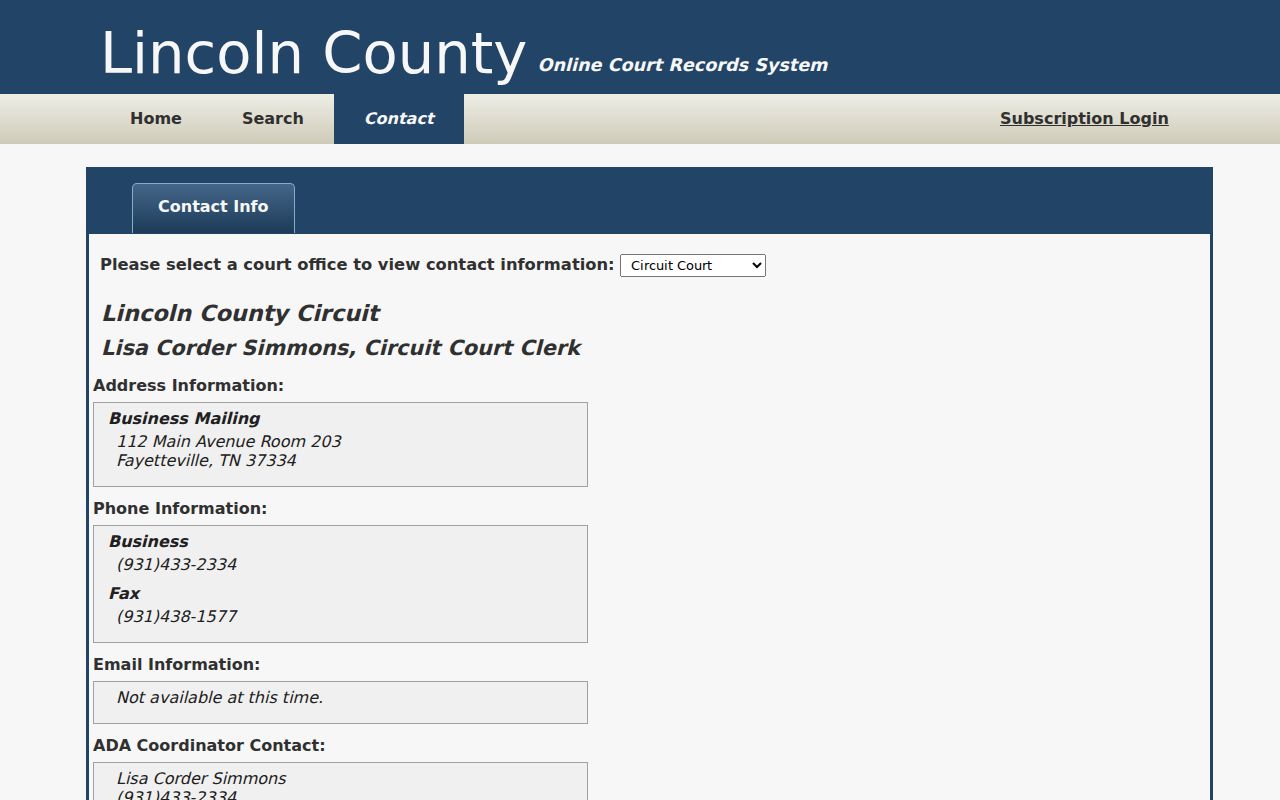
The contact page is the bridge from an informational portal entry to a record the clerk can verify or certify.
Lincoln County Circuit Court Clerk
112 Main Avenue South, Room 203
Fayetteville, TN 37334
931-433-2334
Call first for hours, fees, and older-file access.
How a Criminal Case Moves
A felony may begin in General Sessions with a warrant, bond question, and preliminary hearing. Grand-jury action can then produce an indictment for Circuit/Criminal Court. A misdemeanor may remain in General Sessions through its outcome. Municipal traffic and ordinance cases remain at the city level unless a separate county charge arises. The court level therefore changes what a searcher sees and which clerk holds the file.
Case flow: Charges Filed › Arraignment › Pretrial › Plea or Trial › Disposition › Sentencing
The Tennessee trial-court structure provides statewide context for that Lincoln County path.
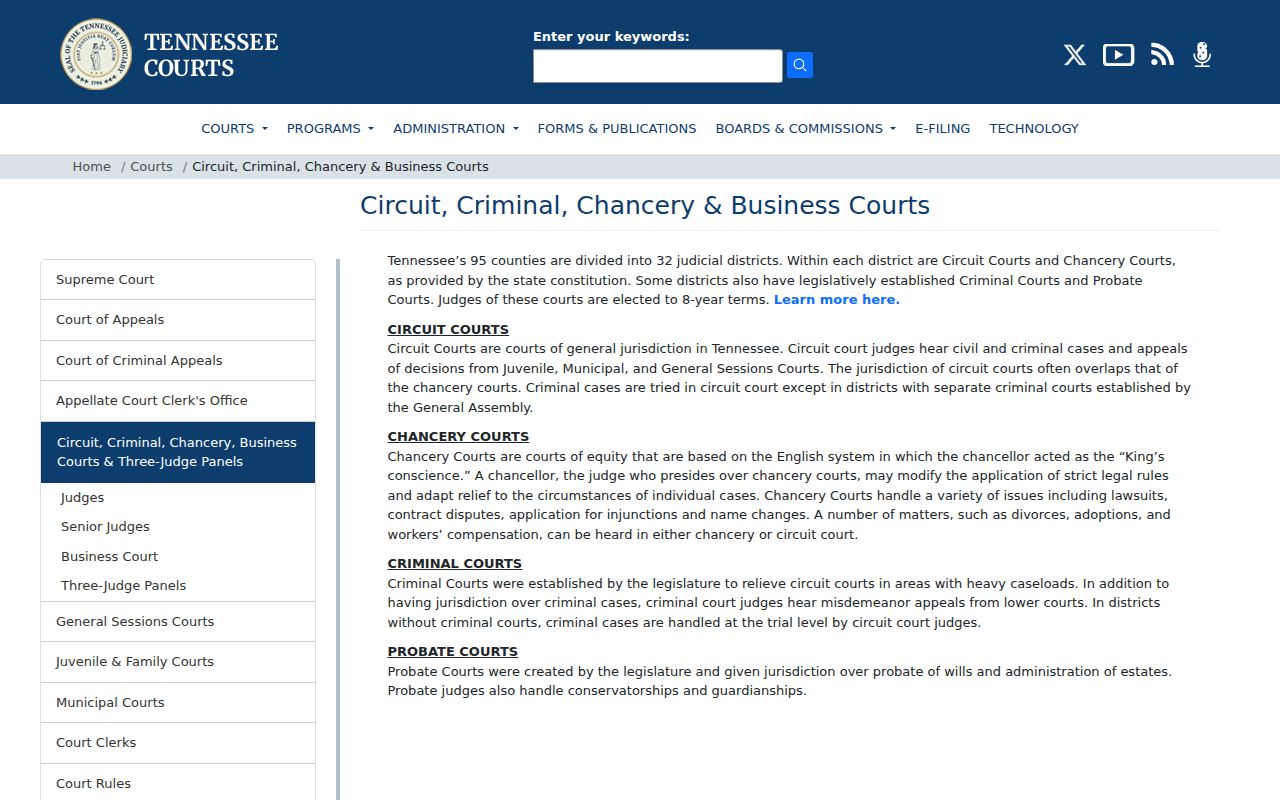
The state court overview reinforces why General Sessions and Circuit searches can represent different stages of one felony matter.
Lincoln County Court Disposition Terms
Outcome terms deserve careful reading. “Disposition” means the result of the charge, not the arrest date. A nolle prosequi means the prosecutor announced that the case would not proceed. A no true bill means the grand jury declined to indict. A retired Tennessee case is inactive and generally must become dismissed before expungement. “Dismissed with costs” can require those costs to be paid or waived before routine relief moves forward.
These distinctions matter when a portal shows an event but Tennessee Open Records Information Services still displays the arrest cycle. Clerks report dispositions and expungement orders to the Tennessee Bureau of Investigation, yet missing or unmatched control numbers can delay the link. The certified Lincoln County judgment or expungement order is the key source for correcting a mismatch.
- Arraignment
- The hearing where the filed charge is stated and a plea is taken.
- Docket
- The dated list of events and filings in the criminal case.
- Disposition
- The recorded outcome of a charge.
- Judgment
- The court's formal decision and sentence record.
Case Record Access and Restrictions
Tennessee Supreme Court Rule 34 supports public inspection of court records unless a law or valid order makes material sealed, protected, or confidential. The Tennessee Public Records Act also governs many local records, but a request must go to the office that keeps the record. Juvenile information, protected personal data, sealed or expunged files, and some judicial or internal material may not be released through an ordinary public search.
The local portal adds another limit. Its Terms of Use say that online data are informational, may change without notice, and are not the clerk's official record. The manifest capture below shows the official disclaimer source.
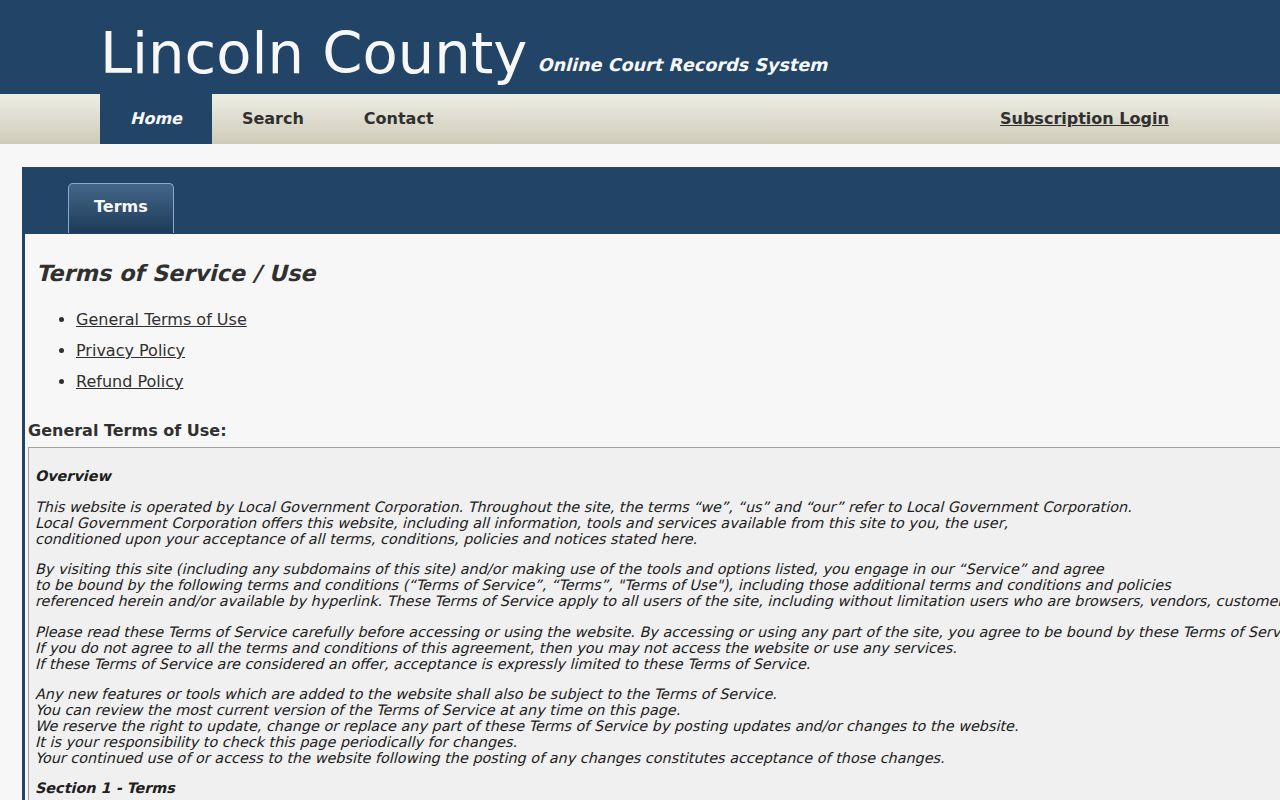
That warning is why a high-stakes reading should be checked against the filed docket and a certified judgment when needed.
Lincoln County Court Custodian Check
Chancery is the wrong criminal-record counter. Its Clerk and Master is in Room B-109 and handles a different court function. The criminal file belongs with the Circuit Court Clerk in Room 203, even though both offices are tied to the courthouse. The 17th Judicial District Attorney's Fayetteville office on Wilson Parkway prosecutes cases and reviews some eligible-conviction expungement packets, but it is not the public docket custodian. That division of roles keeps a request from being sent to an office that cannot certify the record.
The Tennessee AOC clerk directory identifies local record custodians and is shown in the last assigned court image.
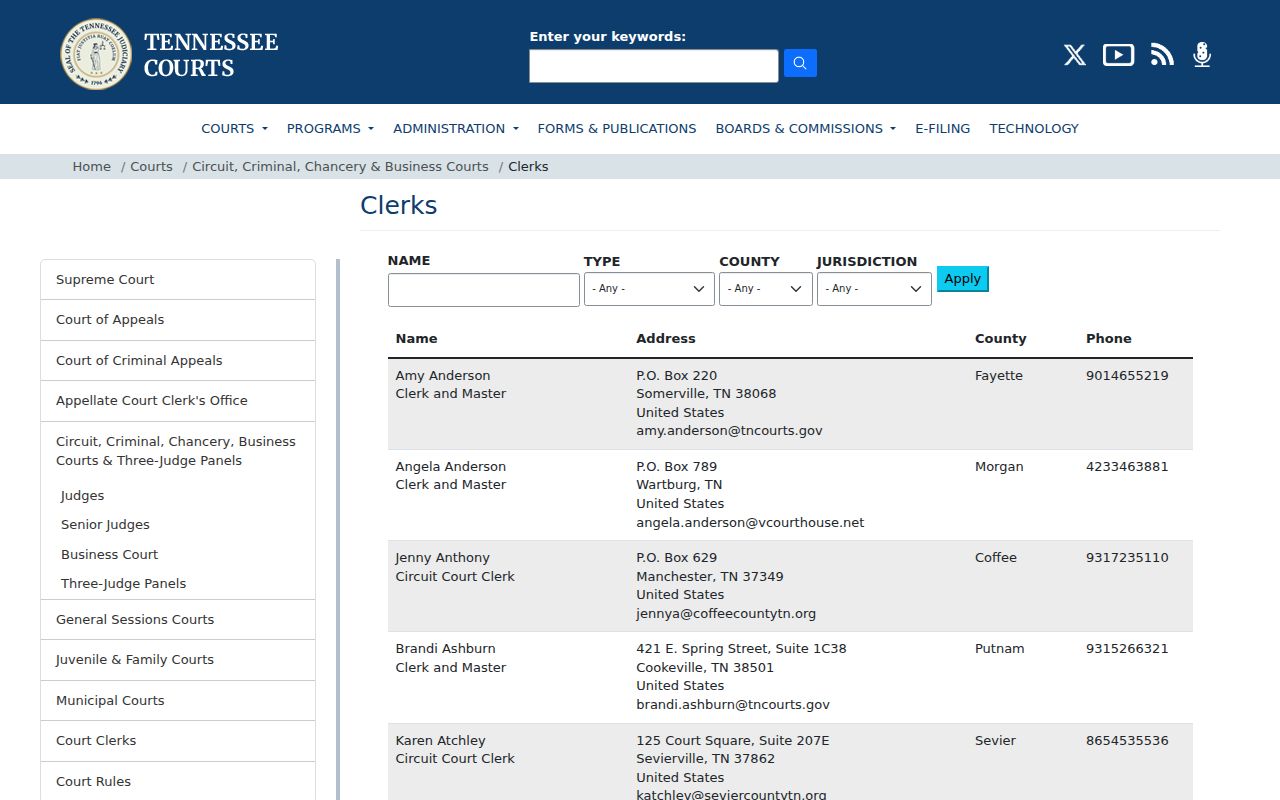
The directory confirms the office to contact when a Lincoln County criminal docket needs an official answer.